
Ayushman Bharat Yojana 2026: How to Apply for Ayushman Card Online and Check Your Name in the List
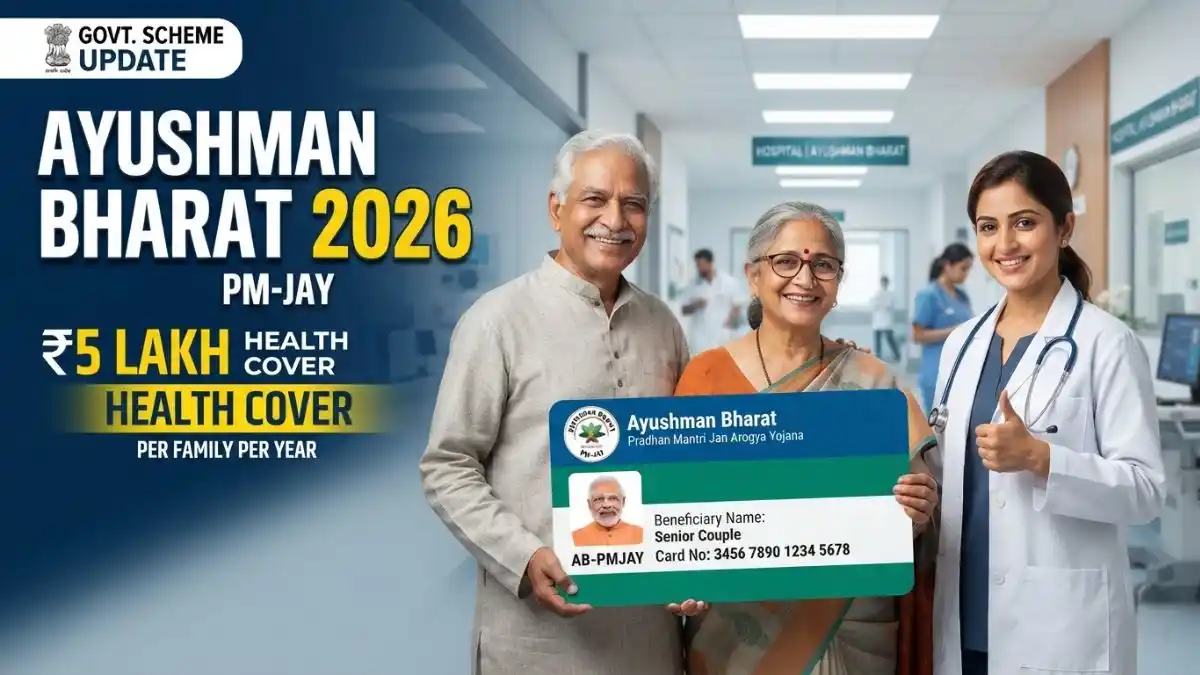

Ayushman Bharat Yojana 2026 is one of the major healthcare schemes of the Government of India. Under the Ayushman Bharat Pradhan Mantri Jan Arogya Yojana (AB-PMJAY), eligible families can get health coverage of up to ₹5 lakh per year for hospitalisation and specified treatments at empanelled hospitals.
A major update under the scheme is the expansion of coverage to all Indian citizens aged 70 years and above, irrespective of their income. This senior-citizen coverage was rolled out from 29 October 2024. Eligible senior citizens receive the Ayushman Vay Vandana Card under AB-PMJAY.
If someone in your family already has an Ayushman Card, or if there is a senior citizen aged 70 or above in your family, it is useful to know how to check eligibility, complete e-KYC, check the beneficiary list and get treatment through the scheme.
In this guide, we explain Ayushman Bharat Yojana 2026, Ayushman Card 2026, Ayushman Vay Vandana Card 2026, how to apply online and how to check your name in the Ayushman Card List 2026.
What is Ayushman Bharat Yojana 2026?
Ayushman Bharat Pradhan Mantri Jan Arogya Yojana (AB-PMJAY) is a government health assurance scheme launched in September 2018. It was introduced to provide financial protection to poor and vulnerable families against the cost of eligible hospitalisation.
The scheme provides coverage of up to ₹5 lakh per family per year on a family-floater basis for secondary and tertiary hospitalisation. Benefits can be used at empanelled public and private hospitals, and the scheme supports cashless treatment for covered services.
According to the National Health Authority, senior citizens aged 70+ who are already part of an AB-PMJAY family can receive an additional top-up cover of up to ₹5 lakh per year for themselves. This additional amount is not shared with family members below 70 years of age. Other eligible senior citizens aged 70+ can receive coverage of up to ₹5 lakh per year on a family basis.
Also read: SGBAU Summer Results 2026 Released for LLB, B.E, B.Tech, MBA and M.Sc
Ayushman Bharat Yojana 2026 Overview
The ₹5 lakh benefit is subject to the rules and packages covered under PM-JAY. Not every medical expense or outpatient service is automatically covered.
| Details | Information |
|---|---|
| Scheme Name | Ayushman Bharat Pradhan Mantri Jan Arogya Yojana |
| In Short | AB-PMJAY |
| Started | September 2018 |
| General Health Cover | Up to ₹5 lakh per family per year |
| 70+ Senior Citizens | All Indian citizens aged 70 years or above |
| Income Limit for 70+ | No income limit |
| Treatment | Eligible hospitalisation and specified treatments |
| Treatment Facility | Cashless treatment at empanelled hospitals |
| Hospitals | Empanelled government and private hospitals |
| Card | Ayushman Card / Ayushman Vay Vandana Card |
| Official Portal | nha.gov.in |
| Helpline | 14555 |
Also read: PNB Bank LBO Recruitment 2026: Big Opportunity for Candidates and Check Eligibility
Ayushman Card 2026 Eligibility
Eligibility depends on the applicable PM-JAY beneficiary database and government rules. For senior citizens aged 70 years or above, the rules are broader: every Indian citizen aged 70+ is eligible regardless of income.
For other family members, eligibility is based on the applicable beneficiary records and scheme rules. Therefore, instead of assuming eligibility, it is better to check your details through the official beneficiary portal.
If your family is already covered under PM-JAY and a member has reached 70 years of age, that senior citizen can also become eligible for the additional senior-citizen benefit, subject to the applicable process and e-KYC requirements.
Also read: UPPSC Assistant Professor Result 2026 OUT: Big Update for Candidates, Check Prelims Result Now
Required Ayushman Card Documents 2026
The documents or information required can vary depending on the beneficiary and the enrolment process. Generally, you may need:
- Mobile number
- Beneficiary or family identification details
- Aadhaar for Aadhaar-based authentication and e-KYC
- Ration card or family-related documents, where required
- Other valid identity or relationship documents, depending on the case
For PM-JAY beneficiary identification, official NHA documentation lists documents such as Aadhaar Card, Ration Card, voter ID, driving licence, birth certificate, passport and other government-issued identity documents among the possible documents used in the system. The exact document requirement can depend on the state and beneficiary case.
Important: Enter your details exactly as they appear on your official documents. Do not share your Aadhaar OTP or other sensitive information with unknown people.
How to Check Your Name in the Ayushman Card List 2026?
If you want to know whether your name is available in the Ayushman Card beneficiary list 2026, you can use the official beneficiary portal.
Step 1: Open the Official Beneficiary Portal
Visit the official Ayushman Bharat beneficiary portal: beneficiary.nha.gov.in.
Step 2: Log In as a Beneficiary
Open the beneficiary login option available on the portal. Enter your mobile number and complete the OTP verification process.
Step 3: Search for Your Beneficiary Record
After login, use the search options available on the portal.
Depending on the current portal process, you may need to select information such as your state, scheme and other required details. You may also be able to search using the identity or family details shown on the portal.
The website interface may change over time, so follow the options currently displayed on the official portal rather than relying on an old screenshot or video.
Step 4: Check Your Family Details
If your record is found, carefully check the information displayed for you and your family members. Check details such as:
- Name
- Age
- Family members
- Beneficiary status
- Other available identification details
If you find an incorrect detail, you can seek help from an authorised CSC or an empanelled hospital/Ayushman help desk.
Step 5: Complete e-KYC
If the portal shows an e-KYC option, follow the official instructions to complete the Aadhaar-based authentication process. For 70+ senior citizens, Aadhaar-based e-KYC is an important part of the enrolment process.
Step 6: View or Download the Card
After completing the required process, eligible beneficiaries may get an option to view or download their Ayushman Card through the available official system. Keep a digital copy of the card and, if required, a printed copy for use at an empanelled hospital.
How to Apply for an Ayushman Card Online in 2026?
The process for applying for an Ayushman Card is not the same as applying for a normal private health insurance policy. Eligibility must first be established under the applicable PM-JAY rules or the 70+ senior-citizen provision.
If you are eligible, the online process generally involves the following steps:
- Open the official Ayushman beneficiary portal or download the Ayushman app.
- Log in using your mobile number and OTP.
- Search for your beneficiary or family record.
- Check your eligibility and personal details.
- Select the available enrolment or card-related option.
- Complete Aadhaar-based e-KYC if required.
- Provide the requested information and photograph, where applicable.
- Submit the required details.
- Check the application or card status on the portal.
- Download the Ayushman Card when it becomes available.
The exact buttons and screen layout can change as the government updates its portal. Therefore, always follow the options currently displayed on the official website.
Important Links
| Service / Website | Direct Link |
|---|---|
| Ayushman Card / Beneficiary Portal | Visit Here |
| PM-JAY Official Website | Visit Here |
| NHA Official Website | Visit Here |
How to apply for an Ayushman Card Offline?
If you are unable to complete the process online, you can seek assistance through a Common Service Centre (CSC) or an empanelled hospital.
Empanelled hospitals have Arogya Mitras, who can help beneficiaries with enrolment, patient admission and the claim process. This can be especially useful for elderly people who may find the online process difficult.
Important Points for Ayushman Card 2026
- The general PM-JAY cover is up to ₹5 lakh per family per year.
- Citizens aged 70 years or above are eligible irrespective of income, subject to the scheme’s applicable conditions.
- Senior citizens aged 70+ who are already part of an eligible PM-JAY family can receive an additional top-up benefit for themselves.
- Treatment is available through empanelled hospitals for covered services.
- Aadhaar-based e-KYC may be required during the beneficiary/card process.
- The portal’s design and options can change, so use the current official instructions.
- Do not pay an unauthorised person for simply checking your eligibility or sharing your OTP.
- For help, use the official PM-JAY support channels.
Ayushman Bharat Yojana 2026 FAQs
1. What is Ayushman Bharat Yojana?
Ayushman Bharat PM-JAY is a government health assurance scheme that provides eligible beneficiaries with health coverage of up to ₹5 lakh per family per year for covered hospitalisation and specified treatments.
2. Who is eligible for the Ayushman Card 2026?
All Indian citizens aged 70 years or above are eligible regardless of income under the expanded senior-citizen coverage.
3. Is there any income limit for people aged 70+?
No. The government states that Indian citizens aged 70 years or above are eligible irrespective of their income.
4. What is the Ayushman Vay Vandana Card?
It is the distinct card issued under AB-PMJAY for eligible senior citizens aged 70 years and above following the expansion of the scheme.
5. How can I check my name in the Ayushman Card List 2026?
You can check your beneficiary record through the official Ayushman beneficiary portal at beneficiary.nha.gov.in.
Conclusion
Ayushman Bharat Yojana 2026 can provide important financial support for eligible families requiring hospital treatment. The expansion for citizens aged 70 years and above, irrespective of income, is especially important for senior citizens and their families.

2 Comments